World Bank ghi nhận những đóng góp giá trị và chuyên sâu của Luật sư Trần Công Quốc cho báo cáo Doing Business 2020

Doing Business của World Bank là một nghiên cứu tổng thể, đem lại bức tranh toàn cảnh về môi trường kinh doanh, hiện trạng pháp luật lĩnh vực kinh doanh, thương mại của hơn 190 nền kinh tế trên toàn thế giới trong vòng một năm.
Đối tượng của nghiên cứu là môi trường pháp lý về kinh doanh thương mại của các quốc gia khác nhau. Nghiên cứu xem xét liệu những quy định pháp luật lĩnh vực kinh doanh, thương mại mà một quốc gia ban hành tạo điều kiện thuận lợi hay là rào cản cho hoạt động kinh doanh của của thương nhân những quốc gia đó. Nghiên cứu còn trình bày những điểm mới, những sự sửa đổi về quy định pháp luật và đánh giá tác động của chúng đến thực tiễn hoạt động kinh doanh, thương mại.

Môi trường pháp lý thuận lợi là một trong những yếu tố quan trọng để các nhà đầu tư lựa chọn đầu tư vào một khu vực hay một quốc gia. Nghiên cứu có tính tham khảo không chỉ đối với các nhà đầu tư mà còn đối với mỗi quốc gia, mỗi nền kinh tế trong tiền trình nâng cao, cải thiện hệ thống quy định pháp luật để hỗ trợ các thương nhân và thúc đẩy các hoạt động thương mại, biến yếu tố pháp lý, chính sách trở thành một trong những yếu tố cạnh tranh, thu hút vốn đầu tư.

Để có được một nghiên cứu toàn diện và sâu sắc nhất, Doing Business 2020 đòi hỏi sự đóng góp về thông tin, phân tích của hơn 14 900 luật sư, nhà nghiên cứu, kế toán, thương nhân, kĩ sư, kiến trúc sư, công chức chính phủ,…từ hơn 190 quốc gia trên thế giới.

Luật sư Trần Công Quốc của Bizconsult với kinh nghiệm tư vấn pháp lý lâu năm tại thị trường Việt Nam, hân hạnh là một trong những cá nhân tham gia nghiên cứu và nhận được sự ghi nhận từ World Bank vì những đóng góp tích cực cho phần đánh giá môi trường pháp lý lĩnh vực kinh doanh, thương mại của Việt Nam trong tổng thể nghiên cứu “Doing Business 2020”.

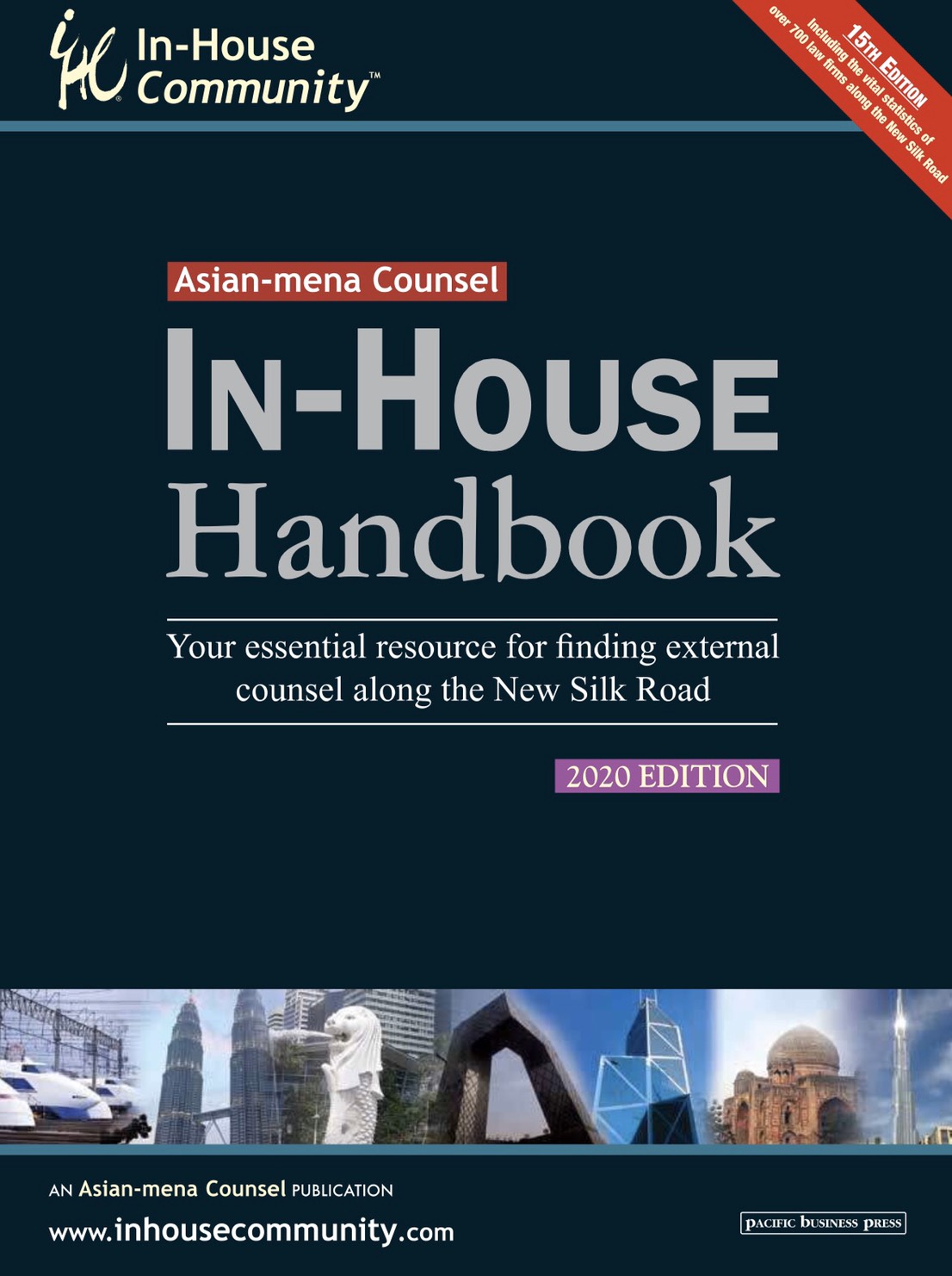
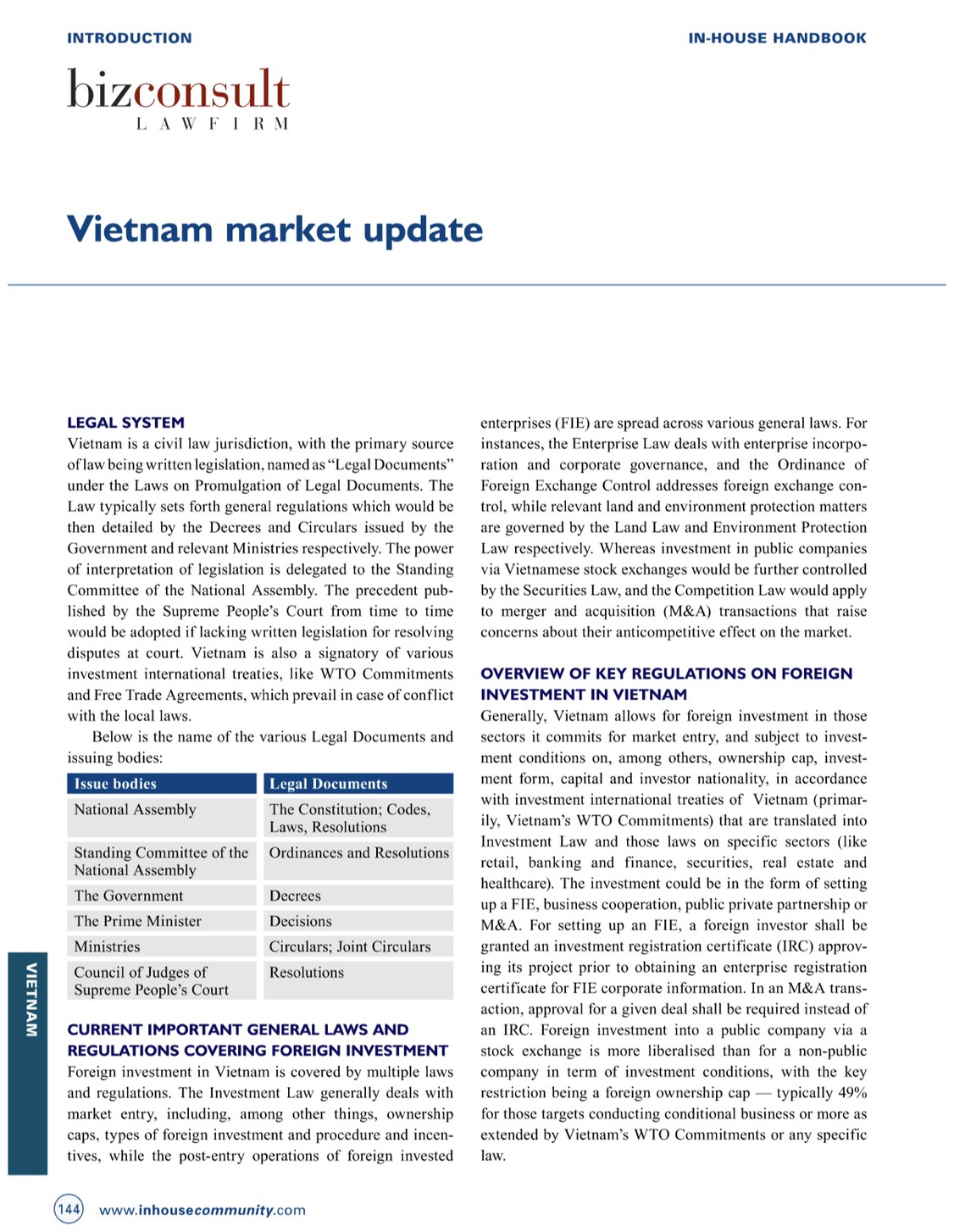
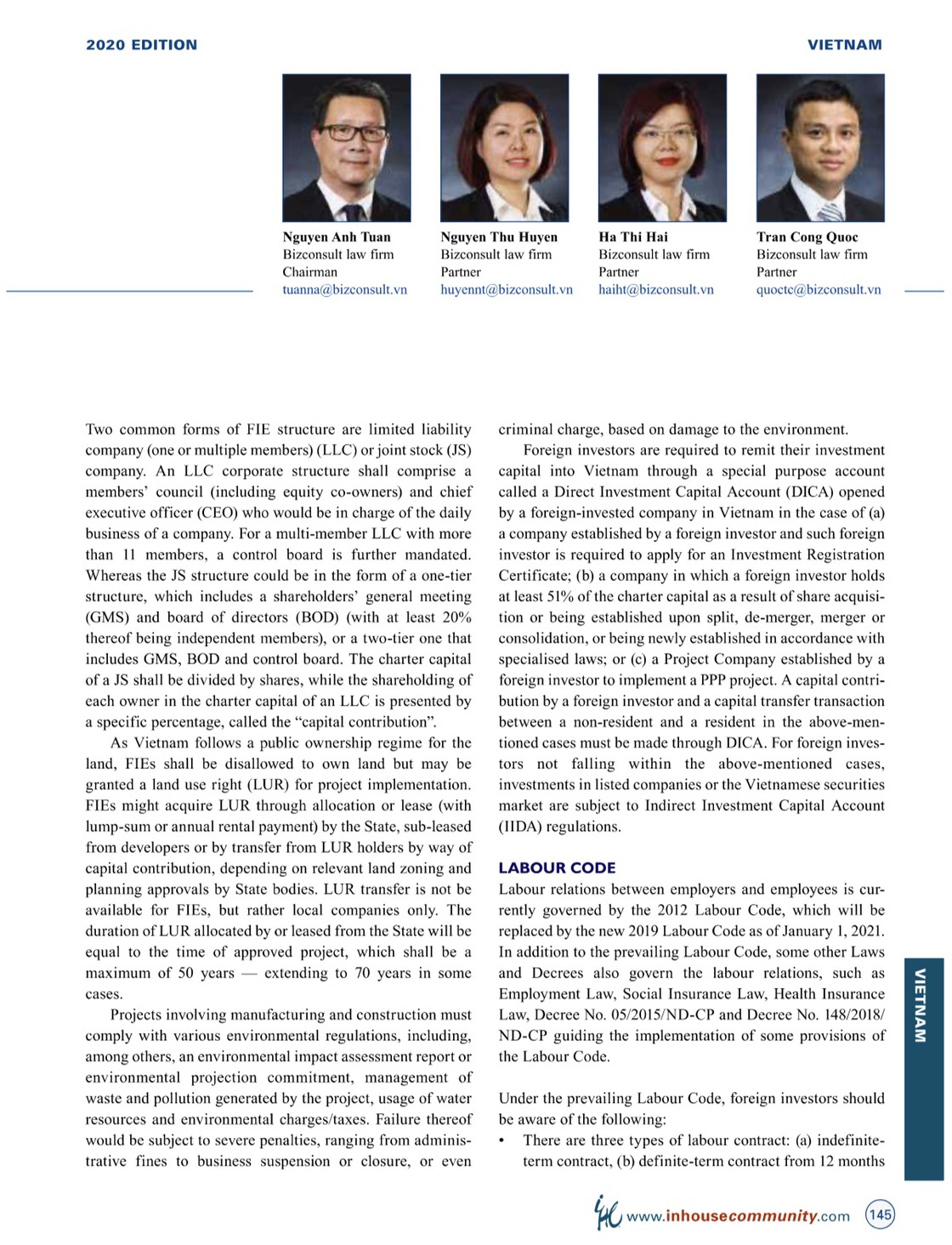
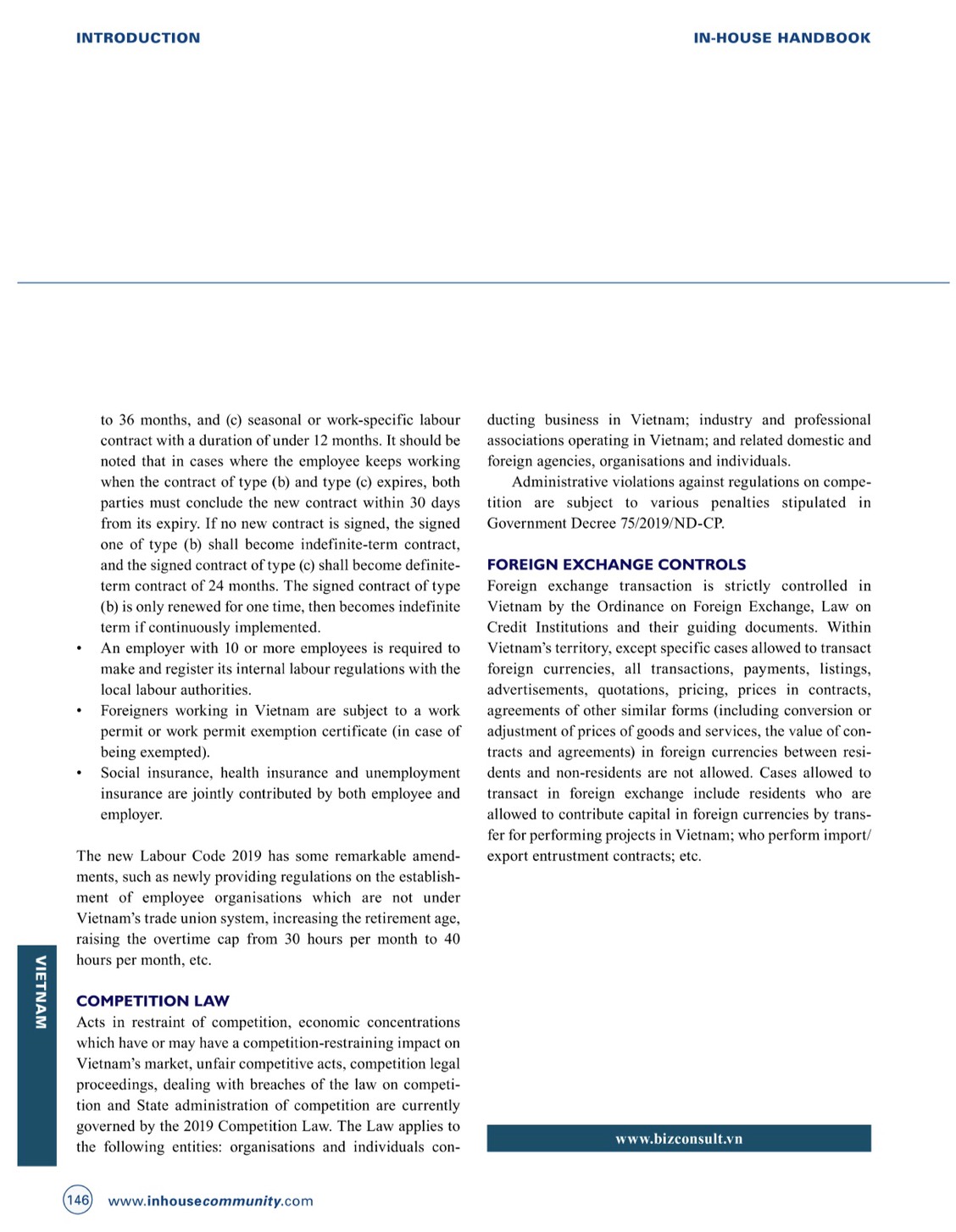
Lawyer Tran Cong Quoc received Certificate of Appreciation from World Bank Group

Doing Business 2020, a World Bank Group flagship publication, is the 17th in a series of annual studies measuring the regulations that enhance business activity and those that constrain it. Doing Business presents quantitative indicators on business regulations and the protection of property rights that can be compared across 190 economies—from Afghanistan to Zimbabwe—and over time. Subnational Doing Business studies capture differences in business regulations and their enforcement across locations in a single country.

Reference research not only for investors but also for each country, each economy in the process of improving the legal system to support businesses and promoting the commercial activities, making legal and policy factors become one of the competitive factors in attracting investment capital.

Lawyer Tran Cong Quoc of bizconsult Law Firm with long-standing legal consultancy experience in Vietnam market, is pleased to be one of the indicators participating in the research and received recognition from the World Bank for his positive contributions to part of legal assessing and comparing in the field of business and commerce of Vietnam in the overall study Doing Business 2020.

BẢN TIN PHÁP LÝ – THÁNG 12, 2019 – QUY ĐỊNH MỚI VỀ HÓA ĐƠN ĐIỆN TỬ KHI BÁN HÀNG HÓA, CUNG CẤP DỊCH VỤ

Hà Tuấn Việt
Trợ lý pháp lý

Ngày 14/11/2019 vừa qua, Thông tư số 68/2019/TT-BTC hướng dẫn thực hiện một số điều Nghị định số 119/2018/NĐ-CP ngày 12 tháng 9 năm 2018 của Chính phủ quy định về hóa đơn điện tử khi bán hàng hóa, cung cấp dịch vụ (“Thông tư 68”) đã chính thức có hiệu lực thi hành. Thông tư 68 đã hướng dẫn và làm rõ các quy định mang tính trọng yếu của Nghị định 119/2018/NĐ-CP, trong đó có một số nội dung đáng chú ý như sau:

1. Quy định về thời điểm phải đăng ký áp dụng hóa đơn điện tử

Căn cứ theo Khoản 3 Điều 26 Thông tư 68 thì kể từ ngày 01/11/2020, các doanh nghiệp tổ chức kinh tế, tổ chức khác, hộ, cá nhân kinh doanh phải thực hiện đăng ký áp dụng hóa đơn điện tử theo hướng dẫn tại Thông tư 68. Như vậy, từ ngày 01/11/2020 các doanh nghiệp có nghĩa vụ đăng ký áp dụng hóa đơn điện tử thay cho hóa đơn giấy (hóa đơn tự in, đặt in hoặc đặt mua của cơ quan thuế).

2. Nội dung và thời điểm lập hóa đơn điện tử

Căn cứ theo quy định tại Điều 3 Thông tư 68 thì nội dung của hóa đơn điện tử đã được sửa đổi về ký hiệu mẫu số hóa đơn và ký hiệu hóa đơn, đồng thời quy định rõ ràng về các trường hợp và lĩnh vực cụ thể mà trong đó hóa đơn điện tử không nhất thiết phải có chữ ký số, chữ ký điện tử của người bán và người mua.
Ngoài ra, Thông tư 68 cũng đã hướng dẫn và xác định cụ thể về thời điểm lập hóa đơn điện tử đối với các hoạt động và lĩnh vực khác nhau như bán hàng hóa, cung cấp dịch vụ, hoạt động cung cấp điện, nước, dịch vụ viễn thông, dịch vụ truyền hình, dịch vụ công nghệ thông tin, xây dựng, lắp đặt, kinh doanh bất động sản, xây dựng cơ sở hạ tầng, xây dựng nhà để bán… phù hợp với quy định tại Điều 7, Nghị định 119/2018/NĐ-CP.

3. Điều kiện của tổ chức cung cấp dịch vụ hóa đơn điện tử

Để trở thành tổ chức cung cấp dịch vụ hóa đơn điện tử, Điều 23 Thông tư 68 quy định các tổ chức phải đáp ứng các điều kiện cụ thể về chủ thể, tài chính, nhân sự và kỹ thuật theo đúng quy định, đây là nội dung mà trước đó Nghị định 119/2018/NĐ-CP chưa có quy định cụ thể, bao gồm:

a) Về chủ thể: Có kinh nghiệm trong việc xây dựng giải pháp công nghệ thông tin và giải pháp trao đổi dữ liệu điện tử giữa các tổ chức, cụ thể:
– Có tối thiểu 05 năm hoạt động trong lĩnh vực công nghệ thông tin.
– Đã triển khai hệ thống, ứng dụng công nghệ thông tin cho tối thiểu 10 tổ chức.
– Đã triển khai hệ thống trao đổi dữ liệu điện tử giữa các chi nhánh của doanh nghiệp hoặc giữa các tổ chức với nhau.

b) Về tài chính: Có cam kết bảo lãnh của tổ chức tín dụng hoạt động hợp pháp tại Việt Nam với giá trị trên 5 tỷ đồng để giải quyết các rủi ro và bồi thường thiệt hại có thể xảy ra trong quá trình cung cấp dịch vụ.

c) Về nhân sự:
– Có tối thiểu 20 nhân viên kỹ thuật trình độ đại học chuyên ngành về công nghệ thông tin, trong đó có nhân viên có kinh nghiệm thực tiễn về quản trị mạng, quản trị cơ sở dữ liệu.
– Có nhân viên kỹ thuật thường xuyên theo dõi, kiểm tra 24h trong ngày và 7 ngày trong tuần để duy trì hoạt động ổn định của hệ thống trao đổi dữ liệu điện tử và hỗ trợ người sử dụng dịch vụ hóa đơn điện tử.

d) Về kỹ thuật:
– Có hệ thống thiết bị, kỹ thuật, quy trình sao lưu dữ liệu tại trung tâm dữ liệu chính theo quy định tại mục d, khoản 1 Điều 32 của Nghị định số 119/2018/NĐ-CP.
– Có hệ thống thiết bị, kỹ thuật dự phòng đặt tại trung tâm dự phòng cách xa trung tâm dữ liệu chính tối thiểu 20km sẵn sàng hoạt động khi hệ thống chính gặp sự cố.
– Kết nối trao đổi dữ liệu hóa đơn điện tử với cơ quan thuế phải đáp ứng yêu cầu về kỹ thuật theo quy định tại Điều 23 Thông tư 68.

4. Quy định về xử lý chuyển tiếp

Từ ngày 01/11/2018 đến ngày 31/10/2020, các đơn vị vẫn có thể áp dụng hóa đơn theo quy định tại Nghị định số 51/2010/NĐ-CP, Nghị định số 04/2014/NĐ-CP và các văn bản hướng dẫn thi hành trong trường hợp cơ quan thuế chưa có thông báo chuyển sang áp dụng hóa đơn điện tử theo Nghị định 119/2018/NĐ-CP.

Kể từ thời điểm sử dụng hóa đơn điện tử theo quy định tại Thông tư 68, trong trường hợp phát hiện hóa đơn đã lập có sai sót thì người bán phải lập văn bản thỏa thuận ghi rõ sai sót, tiếp đó thực hiện thông báo với cơ quan thuế theo Mẫu số 04 Phụ lục ban hành kèm theo Nghị định số 119/2018/NĐ-CP và lập hóa đơn điện tử mới thay thế cho hóa đơn đã lập có sai sót.

Download pdf version

BẢN TIN PHÁP LÝ – THÁNG 12, 2019 – QUY ĐỊNH MỚI VỀ XỬ PHẠT VI PHẠM HÀNH CHÍNH LĨNH VỰC ĐẤT ĐAI

Phạm Quốc Kiên
Trợ lý pháp lý

Ngày 19/11/2019, Chính Phủ đã ban hành Nghị Định 91/2019/NĐ-CP về xử phạt vi phạm hành chính trong lĩnh vực đất đai (“Nghị Định 91”). Nghị định ngày sẽ có hiệu lực kể từ ngày 05/01/2020 và thay thế cho Nghị Định số 102/2014/NĐ-CP ngày 10 tháng 11 năm 2014 (“Nghị Định 102”). Ngoài việc hướng dẫn chi tiết hơn so với Nghị Định 102, Nghị Định 91 cũng đã bổ sung thêm một số nội dung đáng chú ý như sau:

1. Bổ sung khái niệm và chế tài xử phạt đối với hành vi “hủy hoại đất”:

Khái niệm “hủy hoại đất” đã được đề cập tới tại Luật đất đai 2013, tuy nhiên lại không hề được nhắc tới tại Nghị Định 102 và đã khiến cho công tác xử lý vi phạm đối với hành vi hủy hoại đất gặp nhiều khó khăn. Nhận thấy được hạn chế này, Nghị Định 91 đã quy định rõ ràng khái niệm “hủy hoại đất” và các chế tài áp dụng đối với hành vi này.

Cụ thể, Khoản 1 Điều 15 Nghị Định 91 quy định đối với hành vi làm biến dạng địa hình hoặc làm suy giảm chất lượng đất thì tùy theo diện tích đất bị hủy hoại, mức xử phạt sẽ dao động từ 2.000.000 đến 150.000.000 đồng. Mức phạt tiền này được áp dụng cho cá nhân vi phạm và sẽ tăng lên gấp 02 (hai) lần trong trường hợp bên vi phạm là tổ chức. Ngoài ra, tổ chức/cá nhân vi phạm còn bị buộc khôi phục tình trạng ban đầu của đất trước khi vi phạm và sẽ bị Nhà nước thu hồi đất trong trường hợp người vi phạm không chấp hành.

2. Bổ sung các biện pháp khắc phục hậu quả:

Tại Nghị Định 102, các biện pháp khắc phục hậu quả được quy định rải rác tại các điều khoản và chủ yếu bao gồm 03 (ba) biện pháp: buộc khôi phục lại tình trạng của đất trước khi vi phạm; buộc nộp lại số lợi bất hợp pháp có được; và buộc trả lại diện tích đất đã nhận. Tuy nhiên, tới Nghị Định 91, các biện pháp khắc phục hậu quả đã được bổ sung rất chi tiết, cụ thể là có 17 (mười bảy) biện pháp khắc phục hậu quả được quy định tại Khoản 3 Điều 5 Nghị định này (ví dụ: buộc thực hiện thủ tục hành chính về đất đai, buộc hoàn thành nghĩa vụ tài chính liên quan đến đất đai, buộc hoàn thành việc đầu tư xây dựng theo đúng quy định). Đáng chú ý, Điều 7 Nghị Định 91 cũng đã quy định cụ thể các phương pháp xác định số lợi bất hợp pháp đối với từng hành vi vi phạm.

3. Bổ sung nội dung về thời hiệu xử phạt:

Hiện nay, thời hiệu xử phạt vi phạm hành chính trong lĩnh vực đất đai được áp dụng theo các quy định tại Luật xử lý vi phạm hành chính 2012. Nghị Định 91 đã quy định cụ thể thời hiệu xử lý vi phạm hành chính trong lĩnh vực đất đai là 02 năm, đồng thời đưa ra cách xác định thời điểm kết thúc và thời điểm chấm dứt đối với từng hành vi riêng biệt.

4. Bổ sung hành vi không thực hiện thủ tục cấp Giấy chứng nhận quyền sử dụng đất, quyền sở hữu nhà ở và tài sản khác gắn liền với đất của tổ chức thực hiện dự án kinh doanh bất động sản (“Chủ Đầu Tư”)

Trước đây, hành vi vi phạm này và chế tài được quy định tại Nghị Định 139/2017/NĐ-CP ngày 27/11/2017 (“Nghị Định 139”). Quy định này tại đã bị thay thế bởi Điều 31 Nghị Định 91, theo đó tùy thuộc vào thời gian vi phạm (từ 50 ngày đến trên 12 tháng) và mức độ vi phạm (từ dưới 30 đến trên 100 căn hộ, công trình xây dựng, thửa đất), mức phạt tiền đối với Chủ Đầu Tư không nộp hồ sơ thực hiện thủ tục cấp Giấy chứng nhận quyền sử dụng đất, quyền sở hữu nhà ở và tài sản khác gắn liền với đất cho người mua, thuê mua nhà, công trình xây dựng, người nhận chuyển quyền sử dụng đất hoặc không cung cấp, cung cấp không đầy đủ giấy tờ cho người mua, thuê mua nhà, công trình xây dựng, người nhận chuyển quyền sử dụng đất tự nộp hồ sơ có thể lên tới 1.000.000.000 đồng/1 dự án.

Download pdf version

LEGAL UPDATE – DECEMBER 2019 – NEW REGULATION ON ELECTRONIC INVOICES FOR SALE OF GOODS AND PROVISION OF SERVICES

By Ha Tuan Viet
Legal Assistant

On 14 November 2019, Circular No. 68/2019/TT-BTC guiding on implementation of several articles of Decree No. 119/2018/NĐ-CP issued by the Government on 12 September 2018 regarding electronic invoices for sale of goods and provision of services (“Circular No.68”) was officially took effect. This Circular No.68 has guided and clarified the important provisions of Decree No. 119/2018/NĐ-CP which are included several noteworthy points as follows:

1. Regulations regarding the time that the application of electronic invoices must be registed

Pursuant to Clause 3 Article 26 Circular No.68, from 01 November 2020, enterprises, business organizations, other organizations, household businesses and individual businesses shall conduct the registration on application of electronic invoices in accordance with the guidance stated in Circular No.68. Hence, from 1 November 2020, enterprises shall be responsible for conducting the registration on application of electronic invoices instead of paper invoices (self-printed invoices, order-printed invoices or purchased from tax authorities).

2. Contents and issuance time of electronic invoices

Pursuant to regulations stipulated in Article 3 Circular No.68, contents of electronic invoices was amended on invoice code and invoice symbol, simultaneously, contents of electronic invoices was clearly specified on the cases and specifically fields in which electronic invoices are not required to contain the digital or electronic signatures of the buyers and sellers.

In addition, Circular No.68 has also guided and specifically certified on issuance time of electronic invoices regarding difference activities and fields, such as the sale of goods, provision of services, supplication of electricity, water, telecommunications service, television services, IT services, construction and installation, real estate business, infrastructure construction and construction of  house for sales… which are in line with Article 7, Decree 119/2018/NĐ-CP.

3. Condition of organization who provide electronic invoices services

In order to become the organizations which provide electronic invoices services, Article 23 Circular No.68 prescribes that the organizations must satisfied specific conditions regarding subjects, finance, personnel and technology, these are provisions that Decree No. 119/2018/NĐ-CP has not given in details, as follows:

a. Regarding the subjects: Having experience of creating IT solution and electronic data exchange between organizations, specifically as follows:

  • Have been operating in the IT field for at least 05 years.
  • Have deployed IT applications and systems for at least 10 organizations.
  • Have deployed electronic data exchange systems between branches of an enterprise or between organizations.

b. Regarding the finance: Having obtained the guarantee of over VND 5 billion from a credit institution legally operating in Vietnam to resolve risks and compensate damages during the period of providing services.

c. Regarding personnel:

  • There are at least 20 technicians having bachelor’s degrees in IT, of which there are staffs who have practical experience in network administration and database administration.
  • There are technicians who are employed to monitor the electronic data exchange systems and support its users 24/7.

d. Regarding technology:

  • There are processes and equipment for backing up data at the main datacenter according to Clause 1d Article 32 of Decree No. 119/2018/NĐ-CP.
  • There is a backup equipment and technical center which is located at least 20 km away from the main data center and ready to operateonce the main system occurs incident.
  • The connection for exchanging the data of electronic invoice with tax authorities must comply with the technical requirements under the Article 23 Circular No.68.

4. Transition provisions

From 1 November 2018 to 31 October 2020, the units still can apply invoices in accordance with provisions stated in Decree No. 51/2010/NĐ-CP, Decree No. 04/2014/NĐ-CP and guidance documents in case that tax authorities has not issued any notices on switching to application of electronic invoice under Decree 119/2018/NĐ-CP.

From the time of utilizing electronic invoices in accordance with Circular No.68, in case of detecting the issued invoices contains errors, an agreement in written shall be made by sellers, in which clearly states the error, then the sellers shall have to notify to tax authorities under the form No. 04 the Appendixes attached to Decree No. 119/2018/NĐ-CP and issue new invoices for replacing the invoices that contain errors.

Download pdf version

LEGAL UPDATE – DECEMBER 2019 – NEW REGULATION ON PENALTIES FOR LAND-RELATED ADMINISTRATIVE VIOLATIONS


By Pham Quoc Kien
Legal Assistant

On 19 November 2019, the Government has promulgated Decree No. 91/2019/ND-CP on the penalties for land-related administrative violations (“Decree 91”). This decree shall come into effect on 05 January 2020 and replace Decree No. 102/2014/ND-CP dated 10 November 2014 (“Decree 102”). Decree 91 not only instructs in more detail than Decree 102 but also supplement some notable features as follows:

1. Adding definition and penalties with respect to the act of “land destruction”

The term “land destruction” is defined in Law on Land 2013, however such term is not mentioned in Decree 102 and thus causing difficulties in applying penalties on the violation of land destruction. Acknowledging this limitation, Decree 91 has clearly defined the term “land destruction” and corresponding penalties for this violation.

Specifically, Clause 1 Article 15 Decree 91 regulates the action of deforming the land or reducing land quality, the monetary penalties are ranged from VND 2,000,000 to VND 150,000,000 based on the deformed area. The monetary penalties amount is applicable to individuals and shall be double in case the violation is committed by organizations. Furthermore, violating individual/organization is obliged to restore the land to condition prior the violation and the land shall be revoked in case such violator fails to abide the penalties.

2. Supplementing the remedial measures:

In Decree 102, the remedial measures are regulated scatteredly throughout the documents and mainly consisted of 03 (three) measures: obliged to restore the land condition prior to the violations; obliged to return the unlawful gain; and obliged to return the received land. However, Decree 91 has elaborated in detail the remedial measures, specifically there are 17 (seventeen) remedial measures mentioned in Clause 3 Article 5 of this Decree (e.g. obliged to implement land-related administrative procedures, obliged to fulfil land-related financial duty, obliged to complete the construction investment according to the prevail regulation). Furthermore, Article 7 of Decree 91 has also specified the corresponding methods to calculate the amount of unlawful gain for each violation.

3. Supplementing the statute of limitation

Currently, the statute of limitation on land-related administrative violation is in accordance with regulations of Laws on administrative violation 2012. Decree 91 has clearly regulated that the statute of limitation on land-related administrative violation is 02 years, and also specified the method to determine the beginning and ending of each violation.

4. Supplementing the violation of organization investing in real-estate trading project (“Investor”) for not implementing the application procedure for Certificate of Land use rights, Ownership of house and other properties associated with land

Previously, this violation and its penalties is regulated in Decree 139/2017/ND-CP dated 27 November 2017 (“Decree 139”). This regulation is replaced by Article 31 Decree 91, consequently, with respect to the Investor’s violation for not implementing the application procedure for Certificate of Land use rights, Ownership of house and other properties associated with land for the purchaser and/or lessee of house, construction works, the assignee of land use rights, or not provide or insufficiently provide documents to the before-mentioned individuals for self-implementation, depend on the violation duration (from 50 days to more than 12 months) and violation degree (from under 30 to more than 100 apartments, construction works, land lots), the monetary penalty maybe up to 1,000,000,000 per project.

Download pdf version

BIZCONSULT THAM GIA ĐÓNG GÓP Ý KIẾN THAM LUẬN TẠI HỘI THẢO “LẤY Ý KIẾN GÓP Ý ĐỐI VỚI CÁC DỰ THẢO ÁN LỆ VÀ DỰ THẢO BÁO CÁO NGHIÊN CỨU VỀ PHÁT TRIỂN ÁN LỆ TẠI VIỆT NAM”

“Ngày 09/12/2019, Hội thảo “Lấy ý kiến góp ý đối với các dự thảo án lệ và dự thảo báo cáo nghiên cứu về phát triển án lệ tại Việt Nam” do Tòa án Nhân dân Tối cao phối hợp cùng liên minh Châu Âu trong khuôn khổ chương trình “Tăng cường pháp luật và tư pháp tại Việt Nam” (EU JULE) đã diễn ra tại Hà Nội. Hội thảo được chủ trì bởi PGS.TS Nguyễn Hòa Bình, Bí thư TW Đảng, Chánh án TANDTC, Tham gia Hội thảo còn có các Phó Chánh án TANDTC, Thẩm phán TANDTC, lãnh đạo các đơn vị trực thuộc TANDTC, lãnh đạo các Tòa án tỉnh và các nhà khoa học thuộc các Trường Đại học Luật Hà Nội, Học viện Cảnh sát nhân dân, Hội Luật gia Việt Nam… Về phía UNDP, có sự tham dự của bà Caitlin Wiesen – Trưởng đại diện UNDP tại Việt Nam.

Tại hội thảo, Luật sư Nguyễn Trọng Nghĩa – Thạc sĩ Luật Dân sự, Thương mại Cộng hòa Pháp, Luật sư thành viên của Công ty Luật TNHH bizconsult đã đóng góp ý kiến tham luận và đề xuất giải pháp nhằm tiếp tục xây dựng và phát triển án lệ tại Việt Nam. Bà Caitlin Wiesen cho biết UNDP và cộng đồng quốc tế rất quan tâm đến vấn đề công nhận và cho thi hành tại Việt Nam phán quyết của Trọng tài nước ngoài nên họ rất mong trong tương lai gần sẽ có án lệ về lĩnh vực này. Đây cũng là nội dung do bizconsult đề xuất khi trình bày tham luận.
Dự kiến trong thời gian sắp tới, các luật sư tranh tụng của Công ty Luật Bizconsult sẽ quan tâm và cố gắng tham dự các hội thảo, đóng góp ý kiến cho các dự thảo… về các lĩnh vực, vấn đề liên quan đến pháp luật về tố tụng của Việt Nam.”

https://tapchitoaan.vn/bai-viet/thoi-su/hoi-thao-ve-phat-trien-an-le-tai-viet-nam

BIZCONSULT LAW FIRM CONTRIBUTED COMMENTS AT THE CONFERENCE “COLLECTING COMMENTS ON DRAFT LAWS AND DRAFT RESEARCH REPORTS ON CASE LAW DEVELOPMENT IN VIETNAM”

On December 9, 2019, the Conference “Collecting comments on draft laws and draft research reports on case law development in Vietnam” by the Supreme People’s Court in collaboration with the European Union within the framework of the program “Strengthening the law and justice in Vietnam” (EU JULE) took place in Hanoi. The Conference was chaired by Assoc. Prof. Dr. Nguyen Hoa Binh, Secretary of the Party Central Committee, Chief Justice of the Supreme People’s Court. Presenting at the Conference are Deputy Chief Justices of the Supreme People Court, Judges of the Supreme People Court, heads of the SPC’s subordinate units, Chief Justices of the Provincial Courts and experts from Hanoi Law University, The People’s Police Academy, Vietnam Lawyers Association … On the side of UNDP in Vietnam, there is Mrs. Caitlin Wiesen – UNDP Representative in Vietnam.

At the conference, Lawyer Nguyen Trong Nghia – Master of Civil and Commercial Law, Republic of France, Partner of Bizconsult Law Firm contributed comments and proposed solutions for precedents development in Vietnam. According to Mrs. Caitlin Wiesen, UNDP and the international community were very interested in the issue of recognition and enforcement foreign arbitral awards in Vietnam and were looking forward to having a case law in this area in the near future. This content was proposed by bizconsult when delivering the presentation.

Bizconsult’s litigation lawyers are paying attention to and attempting to attend other seminars and contribute opinions, ideas to the drafts … on the fields and issues related to the procedural law of Vietnam.

https://tapchitoaan.vn/bai-viet/thoi-su/hoi-thao-ve-phat-trien-an-le-tai-viet-nam

Legal issues on peer-to-peer lending business In Vietnam

Lưu ý: “bài viết này chỉ phát hành tiếng Anh cho tạp chí nước ngoài Asian- Mena Counsel”

By Ha Thi Hai.

Peer-to-peer (P2P) lending has been growing rapidly in Vietnam, along with the develop­ment of financial technology. There are a number of such enterprises using online platforms to con­nect borrowers and lenders, including Tima.vn, Vaymuon.vn, Fungo.vn and Lendbiz.

What is the principal legal framework of Vietnam for P2P lending business?

As a general principle under the Law on Investment of Vietnam, P2P lending is neither a prohibited nor a conditional business line. This is probably the most favourable legal basis for P2P lending to be conducted in Vietnam in the current context.

With no specific regulation promulgating P2P lending, it may be considered as an e-commerce trading platform, with the “buyer, seller” being the borrower and lender, and “goods, services” being lending activity. However, continuous lending for profit is deemed banking activity and is restricted to credit institutions pursuant to Vietnamese laws. On the other hand, it is prohibited by law to take advantage of the name of e-commerce business activities for illegal capital raising from other traders, organisations and individuals. This is probably the reason why almost all P2P lending businesses fail to register as an e-commerce trading platform in Vietnam.

In practice, because P2P lending companies and all other companies in Vietnam have to register their business activities, P2P lending companies in Vietnam mostly register as investment consultancy, information search services via contracts, financial consultancy supporting services, brokerage activities, etc.

In the current context, what legal issues may a P2P lending company in Vietnam be faced with?

First of all, regarding business activities that are not governed by laws and imply potential risks to the society that may not be managed by state agencies, there is a possibility that the Vietnamese state agencies will consider risk-mitigating measures or enact a regulatory framework for the purpose of management. In fact, the State Bank of Vietnam is currently developing a plan to allow a number of companies that have good financial capacity to pilot P2P lending businesses. After that, the State Bank of Vietnam may add P2P lending to the group of conditional business lines to tighten its management.

The second issue relates to loan interest. As there is no governing regulation, the lending interest rate in civil transactions through P2P lending under the Civil Code 2015 shall be agreed by the parties, but must not exceed 20 percent per year of the loan. It is noted that if the interest rate in a civil transaction is five times higher than the maximum interest rate specified in the Civil Code, earns an illegal profit of from VND30 million to under VND100 million or recommits this offence despite the fact that he/she has incurred an administrative penalty or has an unspent conviction for the same offence, it may constitute a crime of usury in civil transactions under the Criminal Code.

The third matter is responsibilities of P2P lending business to the loan. Due to the absence of legal provisions governing the P2P lending business and responsibilities of P2P lending companies, in the current context, the responsibilities of P2P lending company in case the borrower fails to pay the debt based on the civil laws and the agreements signed between the parties, as well as the rules and regulations of the P2P lending platform which are developed and published on their websites. Therefore, if the agreements, rules and regulations are not well prepared, loans are not well managed, KYC appraisal procedure is absent or not reliable enough, it shall easily lead to an increase of bad debts and complaints about the responsibilities of P2P lending companies when bad debts arise.

The fourth is the issue of payment. A number of P2P lending businesses act as payment intermediaries between borrower and lender for the purpose of controlling information of the loan and fee collection. This activity may face the risk of being considered as a payment intermediary business, which must be licensed by the State Bank of Vietnam. The provision of payment intermediary services without a licence of the State Bank of Vietnam may be subject to administrative fines and confiscation of proceeds.

Fifth, regarding anti-money laundering, organisations conducting financial activities are currently required to comply with very strict anti-money laundering regulations by the Law on Anti- Money Laundering. P2P lending activities that have not been governed by anti-money laundering regulations may lead to the risk that the P2P lending business is unable to control money laundering activities that may arise in loan transactions and potential risks from these money laundering activities.

Learning from the lesson of the explosion of uncontrolled P2P lending in China, leading to the collapse of hundreds of P2P platforms in 2018 and the recent trend of redirection of some P2P lending platforms to Vietnam, the Government will issue legal regulations in the coming time to manage, control, prevent risks and other forms of corruption from P2P lending in Vietnam. Therefore, during this time, P2P lending investors need to do research on relevant Vietnamese regulations carefully to orient their business activities and to avoid the risks of violating the laws. Investors may also consider proactively submitting their business plans to the SBV for consideration and approval to legally pilot this business activity.

Legal issues on peer-to-peer lending business In Vietnam

By Ha Thi Hai.

Peer-to-peer (P2P) lending has been growing rapidly in Vietnam, along with the develop­ment of financial technology. There are a number of such enterprises using online platforms to con­nect borrowers and lenders, including Tima.vn, Vaymuon.vn, Fungo.vn and Lendbiz.

What is the principal legal framework of Vietnam for P2P lending business?

As a general principle under the Law on Investment of Vietnam, P2P lending is neither a prohibited nor a conditional business line. This is probably the most favourable legal basis for P2P lending to be conducted in Vietnam in the current context.

With no specific regulation promulgating P2P lending, it may be considered as an e-commerce trading platform, with the “buyer, seller” being the borrower and lender, and “goods, services” being lending activity. However, continuous lending for profit is deemed banking activity and is restricted to credit institutions pursuant to Vietnamese laws. On the other hand, it is prohibited by law to take advantage of the name of e-commerce business activities for illegal capital raising from other traders, organisations and individuals. This is probably the reason why almost all P2P lending businesses fail to register as an e-commerce trading platform in Vietnam.

In practice, because P2P lending companies and all other companies in Vietnam have to register their business activities, P2P lending companies in Vietnam mostly register as investment consultancy, information search services via contracts, financial consultancy supporting services, brokerage activities, etc.

In the current context, what legal issues may a P2P lending company in Vietnam be faced with?

First of all, regarding business activities that are not governed by laws and imply potential risks to the society that may not be managed by state agencies, there is a possibility that the Vietnamese state agencies will consider risk-mitigating measures or enact a regulatory framework for the purpose of management. In fact, the State Bank of Vietnam is currently developing a plan to allow a number of companies that have good financial capacity to pilot P2P lending businesses. After that, the State Bank of Vietnam may add P2P lending to the group of conditional business lines to tighten its management.

The second issue relates to loan interest. As there is no governing regulation, the lending interest rate in civil transactions through P2P lending under the Civil Code 2015 shall be agreed by the parties, but must not exceed 20 percent per year of the loan. It is noted that if the interest rate in a civil transaction is five times higher than the maximum interest rate specified in the Civil Code, earns an illegal profit of from VND30 million to under VND100 million or recommits this offence despite the fact that he/she has incurred an administrative penalty or has an unspent conviction for the same offence, it may constitute a crime of usury in civil transactions under the Criminal Code.

The third matter is responsibilities of P2P lending business to the loan. Due to the absence of legal provisions governing the P2P lending business and responsibilities of P2P lending companies, in the current context, the responsibilities of P2P lending company in case the borrower fails to pay the debt based on the civil laws and the agreements signed between the parties, as well as the rules and regulations of the P2P lending platform which are developed and published on their websites. Therefore, if the agreements, rules and regulations are not well prepared, loans are not well managed, KYC appraisal procedure is absent or not reliable enough, it shall easily lead to an increase of bad debts and complaints about the responsibilities of P2P lending companies when bad debts arise.

The fourth is the issue of payment. A number of P2P lending businesses act as payment intermediaries between borrower and lender for the purpose of controlling information of the loan and fee collection. This activity may face the risk of being considered as a payment intermediary business, which must be licensed by the State Bank of Vietnam. The provision of payment intermediary services without a licence of the State Bank of Vietnam may be subject to administrative fines and confiscation of proceeds.

Fifth, regarding anti-money laundering, organisations conducting financial activities are currently required to comply with very strict anti-money laundering regulations by the Law on Anti- Money Laundering. P2P lending activities that have not been governed by anti-money laundering regulations may lead to the risk that the P2P lending business is unable to control money laundering activities that may arise in loan transactions and potential risks from these money laundering activities.

Learning from the lesson of the explosion of uncontrolled P2P lending in China, leading to the collapse of hundreds of P2P platforms in 2018 and the recent trend of redirection of some P2P lending platforms to Vietnam, the Government will issue legal regulations in the coming time to manage, control, prevent risks and other forms of corruption from P2P lending in Vietnam. Therefore, during this time, P2P lending investors need to do research on relevant Vietnamese regulations carefully to orient their business activities and to avoid the risks of violating the laws. Investors may also consider proactively submitting their business plans to the SBV for consideration and approval to legally pilot this business activity.